Servicing the feature film industry for over 35 years
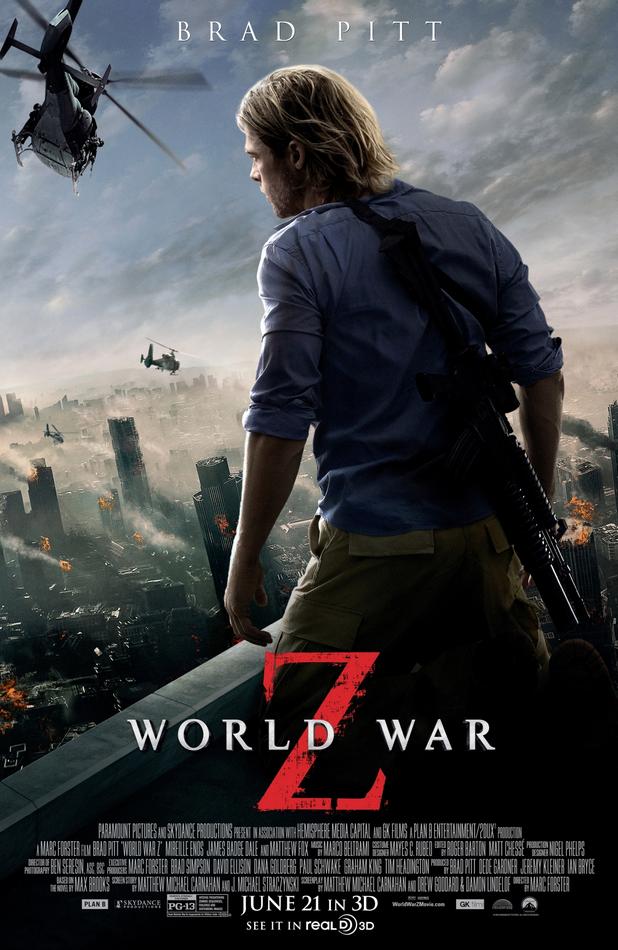
I joined World War Z relatively late in pre-production, having been moved across from Wrath of the Titans. The project was still finding its feet creatively and technically, while the scale of what was being discussed was enormous. It quickly became one of the biggest and most demanding Special Effects jobs I had undertaken.
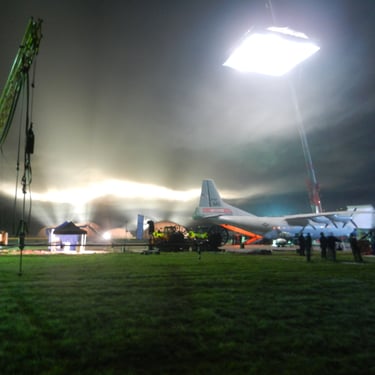
The production took us through Glasgow, Malta and Budapest, with much of our stage work based at Elstree Studios, as well as a major exterior sequence at Upper Heyford.
Among the larger mechanical effects was a full-size helicopter suspended from a crane and mounted on a hydraulically controlled platform, allowing us to rotate, pitch and change the attitude of the aircraft during filming.
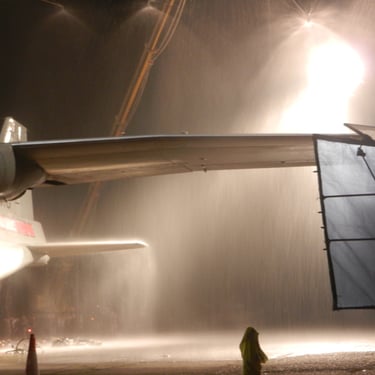
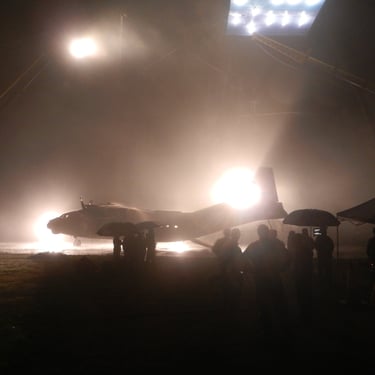
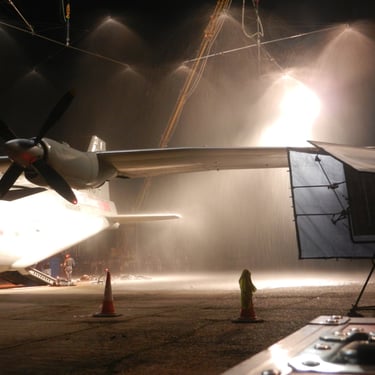
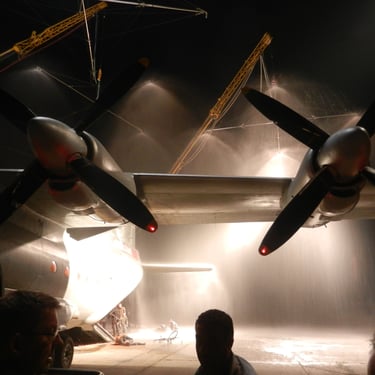
At Upper Heyford we created what remains the largest linear rain effect I have ever been involved with. Brad Pitt travelled through the sequence on a bicycle beneath seven separate overhead rain rigs, all operating simultaneously. Keeping that amount of water moving involved a considerable engineering and logistical operation — relocating and coordinating the rigs, containing the water with dams and maintaining sufficient water supply throughout the sequence. It was an intense piece of practical-effects work and an impressive sight when everything was running together.
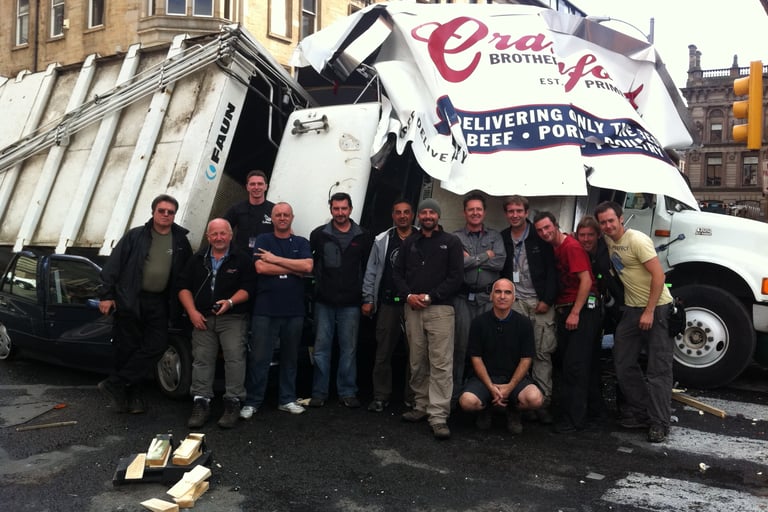
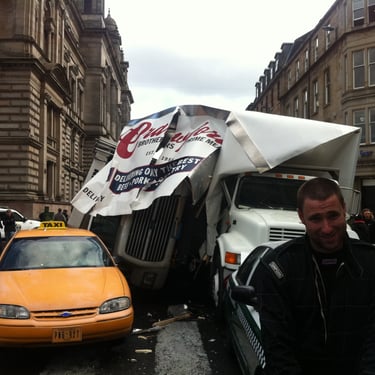
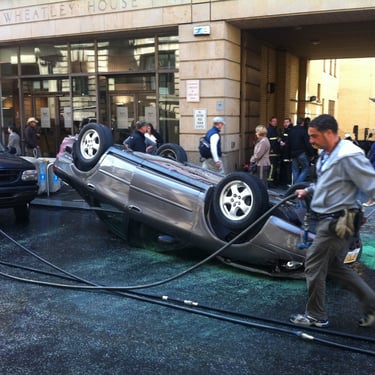
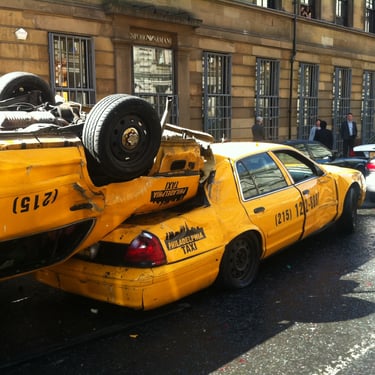
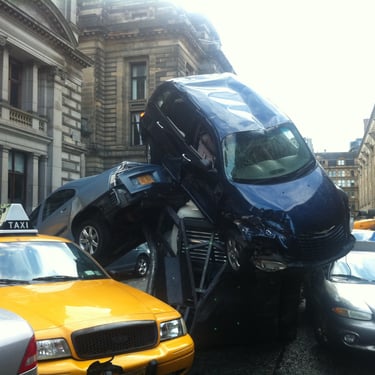
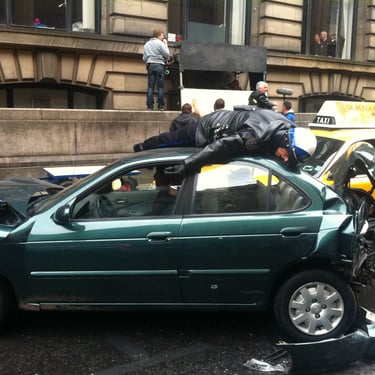
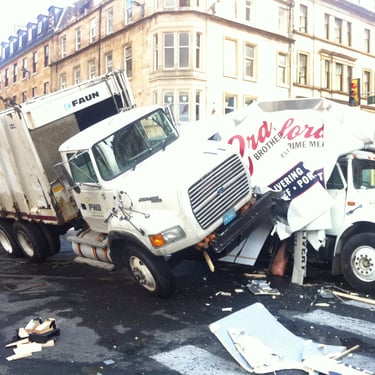
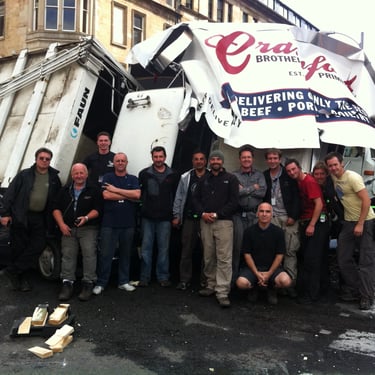
Glasgow was rather more straightforward — we spent our time smashing up cars and trucks, which was great fun. Working alongside legendary Second Unit Director Simon Crane could certainly be demanding, but it was equally rewarding when you delivered exactly what he was looking for.
Malta was another major undertaking, filled with petrol explosions, collapsing bridges, collapsing buses and extensive practical zombie interaction, all designed to provide physical elements that could subsequently be complemented and extended with CGI.
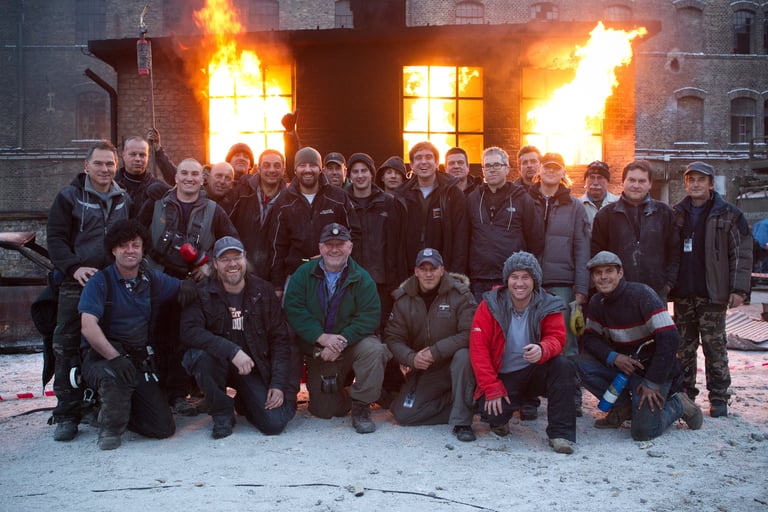
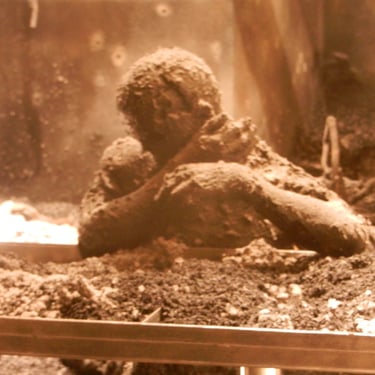
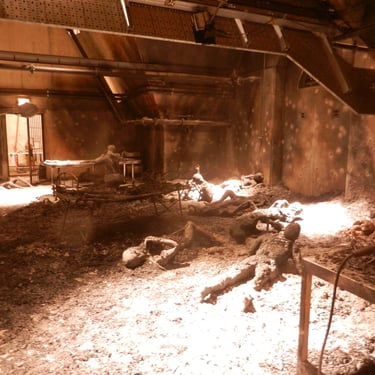
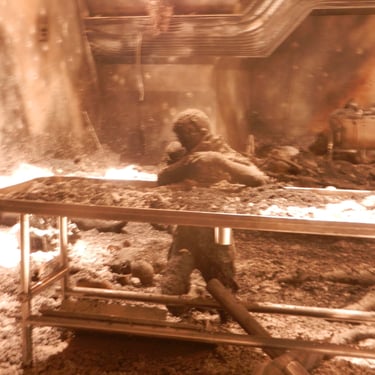
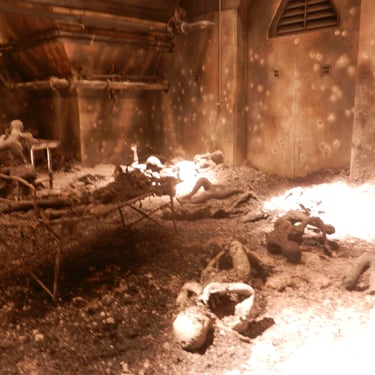
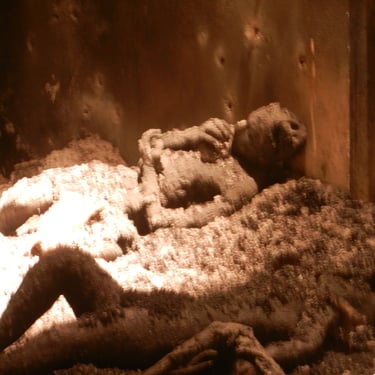
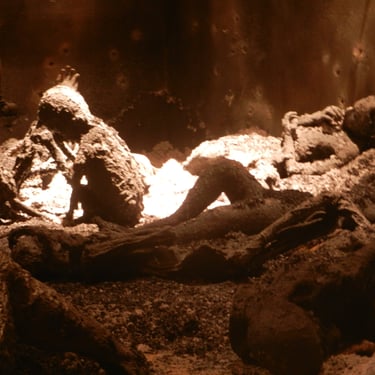
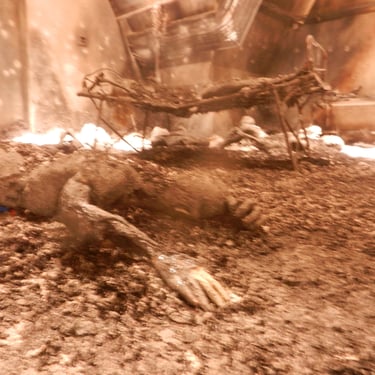
We then spent around two months filming a substantial sequence inside a foundry in Budapest. Unfortunately, despite the amount of work that went into it, the sequence never made the final cut — one of those frustrating realities of making films on this scale.
World War Z remains one of the most satisfying productions of my career. It was difficult, complicated and at times relentless, but by the time we reached the end I had an enormous sense of achievement. Considering the scale of the production and where things stood when I first joined, getting that amount of practical-effects work designed, engineered, coordinated and successfully onto film was something I was immensely proud of.